How to Replace a Kitchen Sink Basket Strainer
Quick and easy fix for a leaky kitchen sink basket strainer. Replace the basket strainer yourself in just an hour and save the cost of a visit from the plumber.
- TIME
- COMPLEXITY
- COST
- One day
- Simple
- $20 – $100
Replace a leaky kitchen sink straine
If you discover a puddle of water in the cabinet under your sink, it may be caused by a leaky basket strainer. Old plumbing fittings can be tricky to loosen, but we’ll show you how to tear them apart and put them back together without any strain. You can pick up all the necessary supplies at a hardware store or home center.
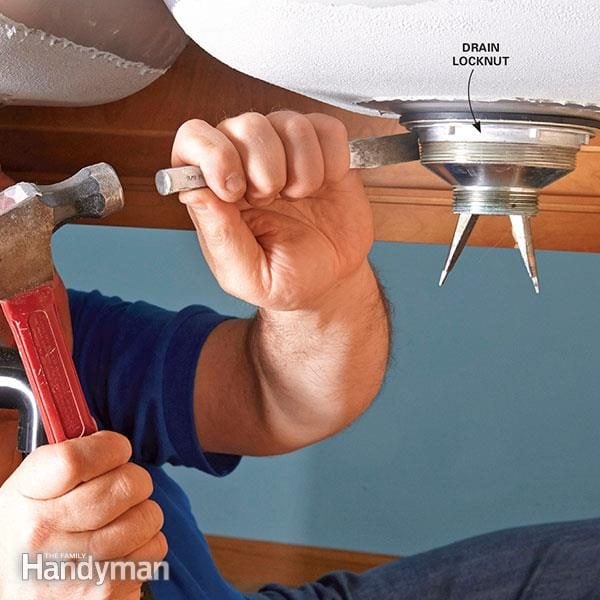
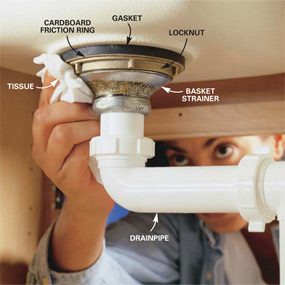
To be sure the leak is coming from the basket strainer instead of a pipe joint, test the basket for leaks as shown in Photo 1. Once you confirm that the basket strainer is leaking, begin the removal process (Photo 2). Photo 3 shows how to remove the strainer locknut, which holds the basket tight to the sink. If the locknut is rusted in place, spray it with penetrating oil. If you don’t have large enough pliers to get a good grip, loosen the locknut by tapping the locknut with a hammer and an old chisel. (If the locknut won’t move, see the next step, below.) Completely remove the locknut, friction ring and gasket, and lift the old basket out of the sink.
Scrape off the old putty with a plastic putty knife so you don’t scratch the sink. Seal the new basket in the sink with plumber’s putty as shown in Photo 4. Plumber’s putty cannot be used on certain new sinks, but these will be labeled to that effect. If you can’t use plumber’s putty, use a non-water-based silicone. Excess putty will squeeze out between the new basket strainer and the sink when you tighten the locknut in place. Wipe it off with a rag or paper towel. Make sure to insert the cardboard friction ring between the rubber gasket and the locknut so the locknut spins freely, without catching on the gasket.
Cut the locknut
If all else fails, chuck a metal cutoff wheel into a rotary tool and cut the locknut. Cut until you reach the cardboard ring above the nut. Don’t cut into the sink. If the nut still doesn’t spin, fit your chisel into the cut area and smack it with a hammer to crack it open. Wear eye protection.
Buying Tips
You have to spend at least $50 to get a high-quality kitchen sink basket strainer assembly with a durable finish and a reliable stopper mechanism. The best strainers have either a spin-lock or a twist-and-drop style stopper. The spin-lock stopper doesn’t have any parts that can wear, but screwing it in and out can be annoying. The twist-and-drop style is much easier to use but requires occasional O-ring replacement.
Avoid push-in style strainers that have a nonreplaceable neoprene stopper or a plastic knob. The plastic parts break and can lose their sealing ability if exposed to boiling water.
Required Tools for this Project
Have the necessary tools for this DIY project lined up before you start—you’ll save time and frustration.
- 4-in-1 screwdriver
- Adjustable wrench (2)
- Hammer
- Locking pliers
- Rotary tool
- Slip joint pliers
Required Materials for this Project
Avoid last-minute shopping trips by having all your materials ready ahead of time. Here’s a list.
- Plumber's putty or clear silicone caulk
Comments
Post a Comment